
When everything feels new, overwhelming, and uncertain
While many times a new arthritis diagnosis can feel overwhelming or even astronomical (or at least it was for me), try to keep in mind that your diagnosis is a part of you and your story, but it is not your whole story. Sometimes receiving a diagnosis may even feel like a relief if you have been seeking help for your health for quite a long time. However, in both cases, it is important to remind yourself that your diagnosis is a facet of your life, and while it may impact many — if not all — aspects of your life, you are still what you love, your hobbies, your interests, your relationships, what you are passionate about, etc. A diagnosis may influence these throughout your health journey, but in no way does it replace anything about you. While others may try to label a person based on their diagnosis, stay true to who you are, and you will rise above this.
Acceptance of a new diagnosis is not linear — there may be some days where you feel more accepting than others (and that is OK!)
In my personal journey, I have had many up and down days regarding how I feel about my diagnoses and how they impact how I feel about myself. Your journey to acceptance of your diagnosis is yours alone, and how you feel will vary from day to day. Just try to remember to be patient with yourself, and practice self-care. What you are feeling is valid, and you are allowed to feel your feelings.
You get to decide who you tell about your diagnosis — and how much you want to tell them about your experience.
This tip is particularly important. On my journey, I have had situations where I am completely open and honest about my diagnoses, but others have not been so kind
Not everyone will be understanding or accepting of your diagnosis — what matters is that you focus on your own health and try not to let others define how you feel.
Receiving a new diagnosis may feel like a relief to you, or you may feel more negatively about it. However, I hope you can find a way to accept it as a part of yourself and find others who will help you feel accepted and validated. Although it can be challenging, there are many self-management strategies you can adopt, communities you can connect with and plenty of support available with services and programs which I have done over the years.
A new arthritis diagnosis can shake your world. You may feel scared, confused, sad, angry, or completely overwhelmed — and all of these emotions are normal.
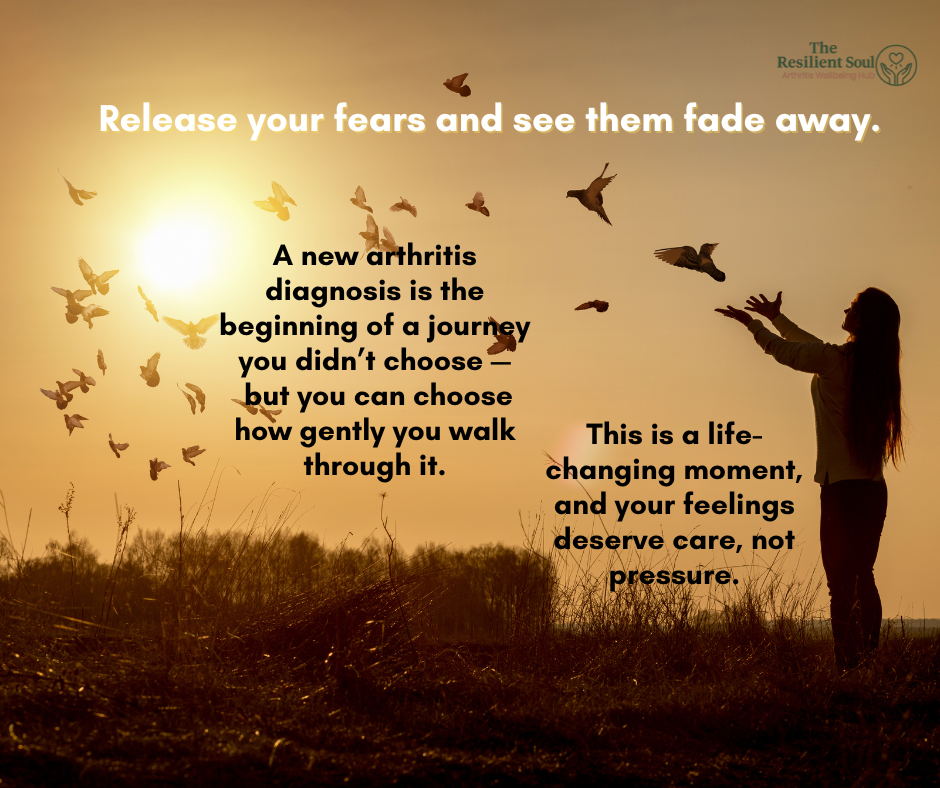
This is a life-changing moment, and your feelings deserve care, not pressure.
Give Yourself Time to Process – You are not expected to understand everything at once. You are allowed to take this slowly. A diagnosis brings real emotional shock. You may grieve your old life or worry about the future. Let the emotions come — gently, without judgement. There is no “right” way to feel.
Learn at Your Own Pace – You don’t need to read every article, join every group, or understand every treatment immediately.
Start with the basics. Take breaks. Focus on what feels manageable. Understanding will grow naturally over time.
Connect with Someone Who Understands – Talking to others who live with arthritis can give you emotional relief, real-life tips, comfort from shared experience and a sense of belonging
Be Kind to Yourself During the Adjustment – You are not walking this path alone. Your routines, energy, and priorities may shift. That’s okay.
Allow yourself to rest more, ask for help, and simplify your days.
This is not weakness — it’s adaptation.
Finding Your “New Normal” After a Diagnosis
Finding your “new normal” after a diagnosis involves redefining what normal means for you and owning your new reality with courage, grit, and maybe a bit of humour. It’s about accepting your new reality and learning to live well with the changes. This new normal might include managing symptoms, attending medical appointments, leaning on loved ones more, or even embracing different passions and priorities than before. It’s not linear, and it’s definitely not one-size-fits-all. Acknowledging your emotions is essential, whether it’s grief, frustration, or relief, all your feelings are valid. Bottling them up only slows down healing, open up. Understanding your diagnosis empowers you. Learn enough to make informed decisions but don’t drown in medical jargon or doom-scrolling. Balance is surely the key. Surround yourself with people who get it—friends, family, support groups, or counsellors. You don’t have to do this alone, and leaning on others can be a game changer.
Be your own advocate.
Don’t hide in the dark. Learn about your condition, find out everything you can about the disease. Talk to your doctors to assess how you can best reach your quality-of-life goals. Don’t beat yourself up if you suddenly have to use aids and tools (such as knee support or elbow support) to help manage your condition—these tools are simply part of the changes your life is going through and will help you maintain your independence as well as quality of life.
Your resilience inspires me. I wish you clarity, strength, and moments of joy as you adapt to this new reality.
Together, we heal. Together, we rise. Together, we are resilient
A gentle reminder
You are more than your diagnosis. Take what supports you, move at your own pace, and always seek personalised guidance from your healthcare team.