
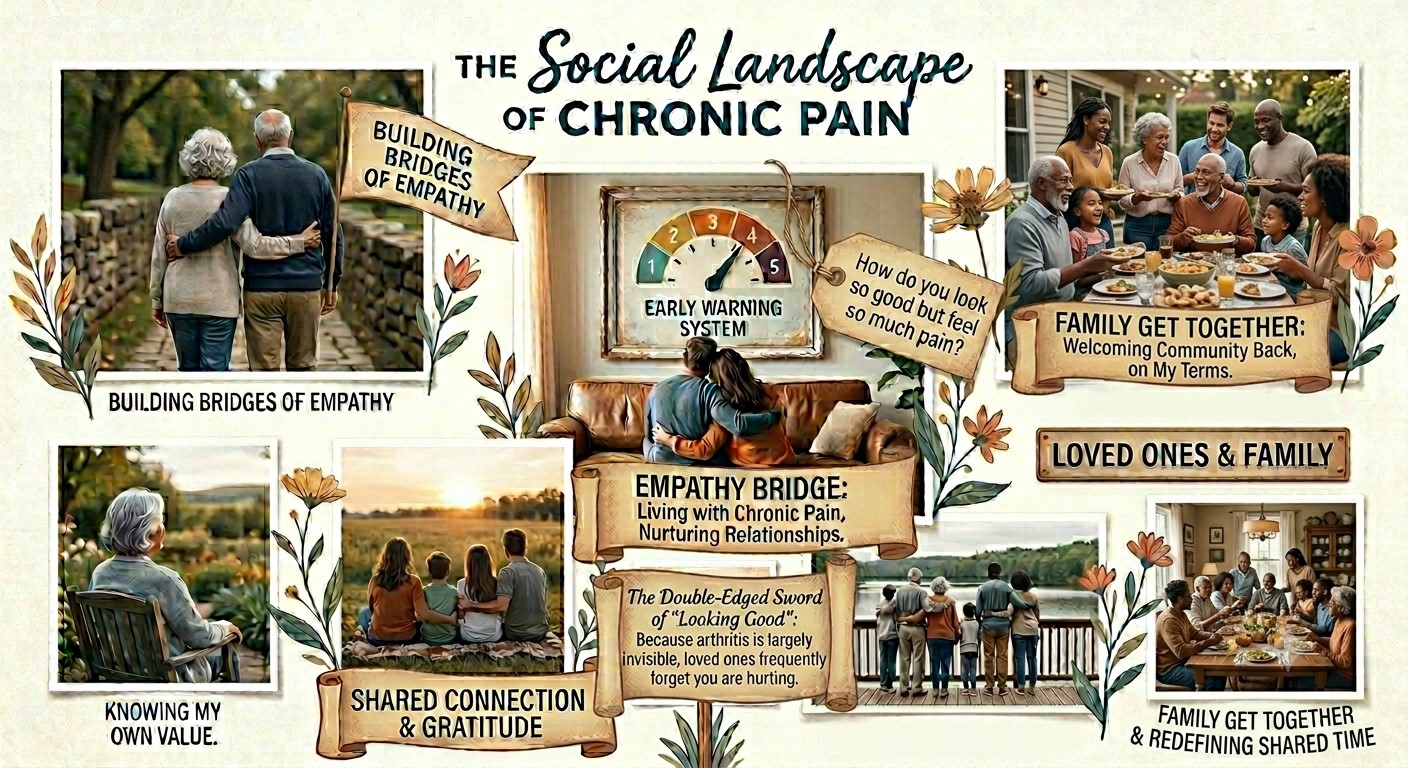
In this fourth installment of our Joint Venture series, we are exploring the social landscape of chronic pain. When you live with a long-term health condition, your physical reality impacts every social connection you have.
Managing chronic pain relationships requires a delicate balance. How do we build bridges of true empathy with family, friends, and partners while fiercely protecting our own emotional well-being?
The Relational Hurdles of Chronic Illness
Living with an unpredictable condition like arthritis alters social dynamics in three distinct ways. Recognizing these hurdles is the first step toward improving chronic pain relationships.
1. The Double-Edged Sword of “Looking Good”
Because arthritis is largely an invisible illness, loved ones frequently forget you are hurting. Well-meaning comments like, “But you look so healthy today!” can feel deeply invalidating. This dynamic forces you into a frustrating corner: do you mask your pain to keep things pleasant, or do you constantly complain so they understand your reality?
2. The Caregiver Imbalance
In romantic partnerships, chronic illness can subtly shift the dynamic from romantic equals to a patient-and-caregiver relationship. If left unaddressed, this shift can trigger intense feelings of guilt for the partner in pain and unvoiced burnout for the supporting partner.
3. The Shrinking Friend Circle
As your social energy decreases during long flare-ups, invitations often stop coming. Friends may incorrectly assume you simply “don’t want to go,” rather than realizing you physically cannot. This misunderstanding often leads to deep, unnecessary isolation that damages healthy chronic pain relationships.
Building an Authentic Connection Matrix
Nurturing healthy chronic pain relationships while managing arthritis requires moving away from guilt and moving toward intentional communication. Here are three actionable strategies to help you connect without draining your emotional battery:
1. Shift from Guilt to Gratitude
Guilt is a toxic emotion that falsely tells you your illness is a personal failure. When your body forces you to cancel plans or ask for physical help, don’t apologize for existing. Instead, shift your language from a painful apology to heartfelt appreciation.
- Instead of saying: “I’m so sorry I ruined our evening by being tired.”
- Try saying: “Thank you so much for being flexible and watching a movie with me tonight. Your support means everything.”
2. Create an “Early Warning System”
Don’t wait until you are in the middle of a severe, exhausting flare-up to explain how you feel. Establish a simple, non-verbal rating system with your immediate family or partner.
Using a scale from 1 to 5 (with 1 being fully energized and 5 being a total system lockdown) allows you to instantly communicate your physical energy budget without needing to give an exhausting medical explanation.
3. Redefine Social Intimacy
You do not have to match everyone else’s physical pace to be a great friend, partner, or parent. Intimacy and connection are built on presence, vulnerability, and shared attention.
If you cannot go out for a hike, invite a friend over for a quiet coffee on the couch or host a relaxed family get-together. If you cannot physically play on the floor with your children, read a book together in bed. Your value to your loved ones lies in who you are, not what your joints can do.
Real Stories: Communication Strategies in Action
To see how these communication shifts transform daily life, consider how these dynamics changed in the households of Meera and Jane:
Meera & Sahil: The Non-Verbal Breakthrough
When Meera held up three fingers, Sahil immediately knew it wasn’t a night for a crowded restaurant, but for a quiet movie on the couch instead. Looking at him, Meera smiled—not to mask her pain this time, but to show the deep gratitude she felt for a partner who truly chose to see her.
Jane & Her Family: The Power of Being Believed
Despite the usual family gatherings filling the room with laughter, Jane felt a quiet relief when her daughter noticed her sitting back and squeezed her hand without prompting. For the first time in months, she didn’t have to explain that behind her practiced smile lay a heavy fatigue; her family simply believed her, offering their presence instead of demands.
A Message to Friends and Family
To the loved ones reading this: the arthritis hero in your life doesn’t need you to fix their illness. They just need you to believe them.
When they say they cannot do something, it isn’t a lack of love, interest, or effort; it is a hard physical boundary. Please, keep sending the invitations—even if they have to say no ten times in a row. Knowing that you still want their company, exactly as they are, is the greatest gift you can offer for healthy chronic pain relationships.
Together, we heal. Together, we rise. Together, we are resilient.
With Warmth,
Sanria
A gentle reminder
You are more than your diagnosis. Take what supports you, move at your own pace, and always seek personalised guidance from your healthcare team.